
May We Introduce You To: Monarch Learning & Attention Center in Eden Prairie, MN
by Lee Gehrls, R&D Coordinator (Volunteer)
Thanks to Adam Gehrls, Vice President, for editing & research assistance
Read Time: 10 Minutes
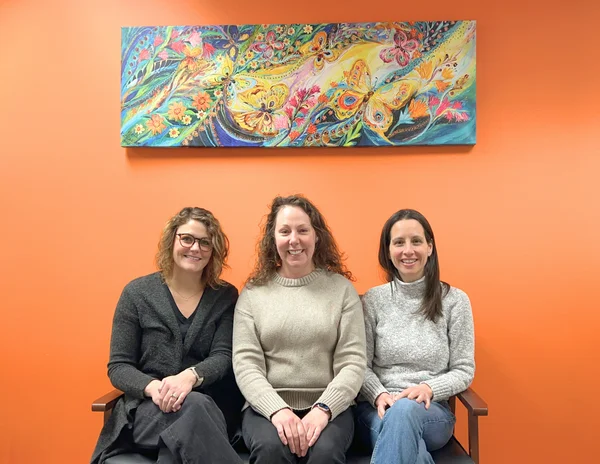
This month, I would like to introduce you to the psychologists at Monarch Learning & Attention Center, located in Eden Prairie, MN. I want to thank Jenn Ehalt, Psy.D., LP; Sarah Kupfer, Psy.D., LP; and Christina Massari, Psy.D., LP for taking the time to work together on their Feature Article to share with our readers their backgrounds, passion for working with those who have ADHD, and information about their counseling practice.
Can you tell us a bit about yourself and how you were drawn to working in your special area of interest?
Jenn and Sarah met in graduate school at the Minnesota School of Professional Psychology at Argosy University. They worked together at Groves Learning Organization, where Christina began working after relocating to Minnesota from the East Coast. Christina, Jenn, and Sarah have a great deal in common, including similarly aged children and a passion for supporting neurodiverse individuals and their families.
We each really enjoy working with neurodiverse individuals, mostly because they are amazing. Oftentimes, the students and families we meet with have developed, or tried to develop, systems to support themselves or their child, and face differences in a world that does not always meet their needs. We have met students who can best answer complex questions while cartwheeling down the hallway. Other students can easily share never-ending details and facts about Minecraft worlds. In our interactions with these students, we are able to celebrate their strengths and unique ways of doing things while also working to identify ways that might make things feel easier in their day-to-day lives. It’s rewarding to help clients and families experience lightbulb moments, such as realizing that a student’s reaction is not intentional but stems from a buildup of events earlier in the day.
We are also regularly blown away by the connections and insights neurodiverse students make. They see the world in such a unique way that it is refreshing to listen to their viewpoints and hear more about how their brains work. Neurodiverse students constantly impress us with their ability to find out-of-the-box solutions to problems that they are exposed to during the testing process or that they describe from everyday life. These interactions help remind us to be specific, or a student will end up doing something in their own way, such as when a student was reminded to put their shoes on and put their shoes on their hands (instead of their feet).
Finally, it is rewarding to help demystify the testing and diagnostic process for students and families alike. We often receive feedback from parents that they felt heard throughout the process and were given the opportunity to ask all of the questions they had. We also hear that students felt comfortable during the testing session, which allowed their true selves to more easily shine through. We value the ability to meet students where they are on the day of testing and give them what they need; whether that is a wiggle seat, walks around the building to move their bodies, or extra opportunities to rest between activities and connect. We view our evaluations as a collaboration with students and families, who know themselves and their child best.
What do you see as the special needs of kids and adults with ADHD, as well as their families?
Kids and adults with ADHD, as well as their families, have important needs that extend beyond symptom management to include understanding, acceptance, practical supports, and environments that are equipped to support differences. Individuals with ADHD benefit from supports that tend to be well known, such as clear structure and flexibility; however, explicit teaching and support related to executive functioning (e.g., planning, organization, time management) and accommodations that acknowledge variability in attention, energy, and emotional regulation are also incredibly important. In our interactions with families, we strive to take a strengths-based approach that celebrates creativity, curiosity, and different ways to problem-solve. Families of individuals with ADHD need accurate, stigma-free education about ADHD as a neurodevelopmental difference, a normal variation that is present from birth, and not a character flaw or a disorder to be “fixed”.
In addition to these needs, we feel that it is especially important to recognize and support individuals with ADHD who “mask” (e.g., hide or suppress) their symptoms in settings like school or at work. For individuals with ADHD, this often means putting a great deal of effort into appearing focused, calm, organized, or “well-behaved”, even when those things do not come naturally. Many individuals with ADHD, particularly those who are capable or highly motivated to please others, expend significant effort to hide inattention, impulsivity, and/or emotional dysregulation in order to meet external demands. While masking can make an individual appear “fine” from the outside, it often comes at a high cost, which can include anxiety, exhaustion, increased risk for depression, and sometimes delayed identification and support. These individuals may struggle silently, falling apart at home or experiencing burnout over time as they continue to mask. They are often overlooked for accommodation or intervention because their challenges are less visible to others.
We believe that professionals have a special responsibility to look beyond the outward presentation of ADHD to understand the internal effort required for individuals to function in demanding environments. We try to meet this goal by creating a safe and welcoming testing environment where we normalize differences. We also use multiple methods of assessment and place incredible value on an individual’s or family’s lived experience.
What do you think are the benefits of working with a facility or program that specializes in services for learning and attention challenges?
A testing practice that has psychologists who specialize in learning and attention differences offers many advantages. Christina, Jenn, and Sarah have specialized and advanced training in neurodevelopmental differences like ADHD, executive functioning, and learning disabilities. We are constantly learning about areas of difference, but also learning from the individuals we have the honor of meeting during the testing process.
Christina and Sarah also have training and experience in identifying social interaction differences, like autism spectrum differences. Our training and backgrounds allow us to differentiate between overlapping areas of concern, identify nuanced patterns of strengths and differences, and avoid misidentification. We also feel that it is equally important to operate from a private-pay model so that we can provide families with an in-depth, yet tailored experience without the constraints of other factors. This flexibility allows us to adjust the scope of our testing if areas of unexpected difference are found. Our ability to take a deeper dive benefits the individuals and families that we meet with because we are able to gain more information, which provides a fuller picture of an individual.
An additional benefit is that each of us has important individuals in our lives or is ourselves neurodivergent. This provides us with everyday experiences, celebrating and supporting the many wonderful (and sometimes challenging) ways that brains work. It also gives us real-world experience navigating and supporting differences in a world that is not always created with those differences in mind. This has helped each of us more easily meet individuals wherever they are during the testing process. Overall, a specialized testing practice, like Monarch, provides families and individuals not just with a diagnosis, but with a clear, actionable roadmap for understanding needs, leveraging strengths, and planning next steps across the lifespan.
Can you describe the services that Monarch Learning & Attention Center offers and what they involve?
We specialize in psychoeducational assessment of learning differences (e.g., dyslexia, dysgraphia, and dyscalculia), attention and executive functioning differences, and social differences (e.g., autism). We provide evaluations for individuals 5 and older. The cost of our evaluations is competitive with other testing providers in the Twin Cities. We are out-of-network and do not work directly with any insurance companies, which allows us to more comprehensively assess areas of concern.
Our comprehensive psychoeducational evaluation is appropriate for students when there are questions or concerns related to academic skill development (e.g., are my child’s reading skills developing at a similar rate to her peers?) and academic performance (e.g., why does my child perform well at home on math assignments yet struggle during math tests?). This evaluation identifies or rules out factors that can impact learning and performance, such as ADHD, specific learning disorders, cognitive differences (e.g., processing speed differences), or emotional factors (e.g., symptoms of depression or anxiety that are negatively impacting a student’s ability to share their knowledge effectively).
Our autism spectrum evaluation is appropriate for students when there are questions about social interactions, communication, and/or behavior (e.g., deep interests, repetitive behaviors, and/or sensory sensitivities or preferences). This evaluation also identifies or rules out factors that can impact learning and performance, such as ADHD, specific learning disorders, cognitive differences, or emotional factors, as described above.
We also provide adult evaluations for individuals who have questions or concerns about ADHD and/or autism. This evaluation is appropriate for individuals who are no longer attending school, as it does not include an assessment of academic skills. These evaluations include a combination of clinical interviews, standardized assessment measures and questionnaires, and behavioral observations, tailored to the unique needs of adults. The goal is not only to provide a clear diagnosis to help advocate for supports, but also to understand how symptoms currently and historically impact daily life and relationships.
In addition to evaluations, we also partner informally with providers in the area who support individuals with differences. This allows us to readily refer families to others who are able to provide specialized support, like therapy, tutoring, or coaching, to areas of identified difference.
How can our readers find out about your services?
We have a number of different avenues for interested individuals to gain more information about our services. They can navigate to our website (https://www.monarchassessment.com/) to learn more about our services, find answers to frequently asked questions, or learn more through our blog. Through the Contact tab on our website, individuals can send us a message, and our incredible intake coordinator, Char, will respond via phone or email. In addition, Char is available Monday through Thursday by phone (612-562-9007) or email (admin@monarchassessment.com) to answer questions, share more about the testing process at Monarch, and help schedule appointments. For individuals who prefer to set time aside and prepare for a conversation, Char also offers consultations Monday through Thursday. These 30-minute consultations can be scheduled through the Contact tab of our website.
If you are available for community speaking events, please describe the event, including fees and contact information for bookings.
Jenn Ehalt offers engaging presentations to schools, medical and mental health professionals, and community members on topics such as ADHD, executive functioning, and learning disorders. These sessions provide practical insights and strategies to support neurodiverse children and adolescents. Jenn is passionate about education because earlier identification, support, and understanding can make a significant, positive impact on the well-being of such individuals. By raising awareness and sharing knowledge, Jenn aims to empower communities to create supportive environments where every child can thrive.
What is the most important takeaway you want our readers to know about living with ADHD?
The most important takeaway about living with ADHD is this: there is nothing wrong with you or your brain. ADHD is not a character flaw, a lack of effort, or a personal failure—it is a difference in how your brain processes information, regulates attention, behavior, and emotions, and responds to the world around you. Many of the struggles people with ADHD experience come not from ADHD itself, but from living in a society that is structured around neurotypical expectations of productivity, organization, emotional regulation, and pace. When success is narrowly defined, and support is inconsistent or absent, neurodivergent individuals are often left feeling inadequate, “bad”, or “behind,” despite working harder just to meet basic demands. Understanding ADHD through this lens shifts the focus away from shame and self-blame and toward self-compassion, appropriate supports, and environments that recognize and value different ways of thinking and being.
Making the right connections can make all the difference.sm
Disclaimer: This document is for information purposes only. A-D-A-M℠ does not receive compensation from the above stated apps or any other organization. If you are considering applications or other products be sure to do your research, as there are alternatives that could be better suited for your needs. Always consult your primary healthcare and/or mental healthcare provider on the treatment of ADHD and related conditions.
Disclaimer: A-D-A-M℠ provides information about Attention-Deficit/Hyperactivity Disorder in the form of resources, including articles, books, videos, and websites, as well as links to directories to help you find health professionals, services and facilities that provide services for Attention-Deficit/Hyperactivity Disorder. This information and these directories are provided as a convenience and for informational purposes only; they do not constitute an endorsement or an approval by A-D-A-M℠; and to the best of A-D-A-M’s knowledge are true and accurate at the time of publication. A-D-A-M℠ makes no claim, promises or guarantees about the accuracy, completeness or adequacy of the contents found in this information and in these directories, and expressly disclaims liability for errors and omissions. Although great care is given to the composition and contents provided, A-D-A-M℠ cannot guarantee the correctness of the nature and contents of the information. Any person or entity that relies on any information obtained through these resources does so at his or her own risk.

